The Invisible Game: How Shelf Position Determines Whether Your CPG Brand Survives
Most CPG founders fight to get on shelf. Few understand that where they sit on the shelf often matters more than getting there. Here's how to win the planogram game.
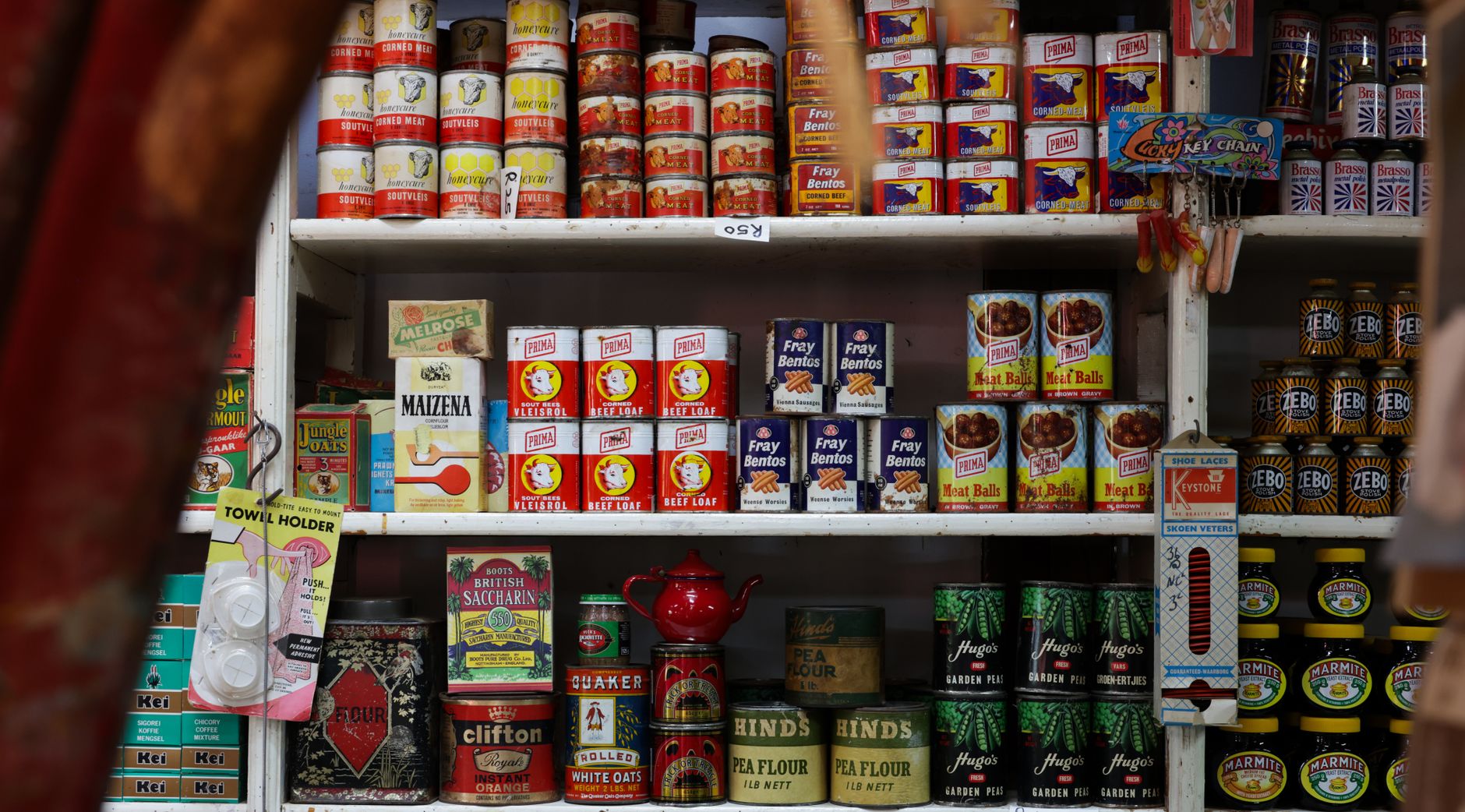
A Whole Foods buyer told me something that stopped me cold. This was about six or seven years into Suja. We'd been grinding, adding doors, fighting for every inch of distribution. I was feeling pretty good about where we were. And she looked across the table and said, almost matter-of-factly, "Jeff, I have sixty-two cold-pressed juice brands requesting meetings right now. I can't possibly see them all."
Sixty-two.
We'd started when there were three national competitors. Now there were sixty-two clawing at the door.
I walked out of that meeting with a very different feeling than when I walked in. Getting on shelf is hard. Staying on shelf is a different kind of hard. And most founders — including me for longer than I'd like to admit — spend all their energy on the first problem while barely thinking about the second.
Here's what I eventually learned: where you sit on the shelf can be more important than whether you're on the shelf at all.
The Invisible Game Nobody Tells You About
When you're fighting to get distribution, shelf position feels like a luxury problem. You'll take whatever the buyer gives you. Bottom shelf, behind the door, tucked in next to the category dinosaur that's been there for twelve years. Doesn't matter. You're in.
Then six months go by. Velocity is mediocre. You can't figure out why. The product is great, the price is fair, the marketing is working. Something isn't adding up.
It's often the shelf.
I had a retail partner once who put it bluntly: "Sometimes moving six inches on a shelf can have a bigger impact than spending thousands on advertising."
He wasn't wrong. Eye level is buy level. That's not a cliché — it's shopper psychology backed by decades of syndicated data. The shelf sets between three and five feet from the ground captures the majority of unplanned purchases. The bottom shelf below eighteen inches? Invisible to most shoppers unless they're specifically hunting for something.
Where you are in the section matters too. Beginning of an aisle gets browsed. The middle of a long cooler door gets skipped if the product next to you has stronger visual disruption. Adjacencies — what's on your left and right — can either pull customers toward your brand or bury you in the wrong context.
This is the invisible game. And it has real stakes.
Velocity Is Your Rent Payment
Here's the frame every CPG founder needs to internalize: shelf space is rented every week. Velocity is your rent payment.
Retailers aren't doing you a favor by giving you space. They are merchants. Every facing on every shelf is producing, or it isn't. If your velocity isn't earning your spot, you're occupying square footage that a competing brand could make productive.
The percentile benchmarks we used at Suja — and that I teach every founder now — look roughly like this:
- 80th percentile and above: You're growing the category. Expand if you can.
- 60–80th percentile: Healthy. You're likely safe at the next reset.
- 50th percentile: Doing okay, but only okay. This is not a resting place.
- 30–50th percentile: Trouble is coming. You need a plan or you won't make the next reset.
- Below 20th percentile: You have roughly nine months. Maybe less. Something is seriously wrong.
That's the math. But here's what most founders don't know: your velocity is partly determined by your shelf position. It's a self-fulfilling loop. Bad position produces lower velocity. Lower velocity justifies worse position at the next reset. You spiral down.
The reverse is also true. Good position produces trial, trial produces repeat, repeat drives velocity, strong velocity earns more facings. You spiral up.
Which direction you spiral is partly in your hands.
Understanding the Planogram
A planogram — "plan-o-gram" — is the map of your retail shelf. Every product, every SKU, every facing is assigned a specific x-y coordinate. It's not random. The buyer or their category manager designs it based on sales data, supplier agreements, promotional obligations, brand mix, and sometimes negotiation.
Most emerging brands have almost no input into their initial placement. You take what you get.
That's Stage 1 thinking.
Stage 2 is understanding that planograms get reset — typically once or twice a year, though it varies by retailer and category. That reset is your opportunity. Not to beg for a better spot, but to earn one with data.
At Suja, we had Jason Polinsky as our category manager — eventually reporting directly to me, which tells you how seriously we took this. His entire job was to understand the category so completely that our proposals to buyers weren't sales pitches. They were category recommendations that happened to feature Suja. That's a very different conversation to have.
The key insight is this: buyers want their category to grow. Not just your brand. The whole set. If you can walk in with a planogram proposal that makes the case for category growth — with data showing that your products draw incremental buyers, expand basket size, or create adjacency lift — you become a category partner instead of just another vendor fighting for inches.
That's how you win better position. Not by asking for it. By making the data case that you've earned it and that the category is better off with you in a prominent spot.
What You Can Actually Control
Let me be tactical here, because this matters.
1. Submit your own planogram recommendations.
Most small brands wait to see what they get. The best brands submit a proposed planogram to the buyer before every reset. Build it in Shelf Logic, Apollo, or any planogram software. Use your SPINS or Nielsen data to show your velocity relative to the set. Propose where you should sit and why. Even if you don't get everything you ask for, you're in the conversation — and you're signaling that you think like a category partner.
2. Understand your velocity percentile before every buyer meeting.
If you don't know where you rank in the set, you're negotiating blind. Pull your velocity data. Know whether you're at the 50th percentile or the 75th. Know whether your velocity has been trending up or down over the last 13, 26, and 52 weeks. Walk in with that context. Buyers respect founders who know their numbers cold.
3. Use promotions strategically to boost position, not to maintain it.
Promotions create trial. Trial drives short-term velocity. Short-term velocity can move you up in a buyer's mind during reset season. But here's the trap I see constantly: founders use promotions as a band-aid to prevent a bad reset instead of a tool to earn a better one. Those are different strategies with very different outcomes. Don't confuse distribution gains with velocity gains. And don't confuse promotional velocity with real, baseline demand.
4. Address poor position proactively.
If you're on the bottom shelf and your velocity is suffering, raise it yourself. Don't wait for the buyer to bring it up. Go to them and say: "Here's what I'm seeing. Here's why I think position is a factor. Here's what I'd like to try and what data I'll bring back to show you whether it worked." Buyers appreciate transparency. And they almost never get it. Most brands hide their velocity problems. The ones who get better position are usually the ones who went to the buyer first.
5. Fight for your adjacencies.
If you're a premium health brand, you don't want to be shelved next to the cheapest product in the category. If you're the innovation story, you want to be near the category leader — close enough to get the comparison shop, far enough to feel distinct. These things can be negotiated, especially when you're a category partner with real data behind you.
The Clock Is Already Running
The other thing most founders underestimate is how fast the clock ticks.
Once you're on shelf, you typically have about nine months to prove you belong — sometimes less in hyper-competitive categories. That nine-month window includes your first reset. If your velocity is in the bottom quartile heading into that reset, you are at serious risk.
I watched Rowdy Energy — a brand I was involved with — pay nearly a million dollars in one-time slotting to Albertsons. The product underperformed velocity targets. It was discontinued in eight months. That's what the clock looks like when it runs out.
This isn't meant to scare you. It's meant to wake you up to the fact that retail is not passive. You don't get distribution and then wait to see what happens. The shelf is active, the clock is running, and position is a strategy you work on from day one.
The Truth Is at the Shelf
There's a phrase a smart retail operator named Jody Cnossen used at Suja that I've never forgotten: "The truth of the business is at the shelf."
Not in your pitch deck. Not in your financial model. Not in your Instagram analytics. At the shelf. That's where the consumer makes the decision, where velocity is born or strangled, where your brand either earns its spot or quietly gets pushed off.
Sixty-two brands wanted a meeting at Whole Foods. One slot opened. Data won that slot — not charm, not logos, not a great story.
Your story matters. Your data wins.
Go earn your six inches.
If you're building a CPG brand and want a playbook for retail strategy, velocity benchmarking, and what it actually takes to scale past $10M — check out the MBA for CPG program and the 90-Day Breakthrough intensive at CPG Founders Group.
Want more insights like this?
Get Jeff’s take on what’s actually working in CPG. Direct to your inbox.