Slotting Fees: What Every CPG Founder Needs to Know Before You Pay to Play
Slotting fees can make or break your CPG brand. Learn when to pay, when to walk, and how to negotiate shelf space you can actually keep.
I've paid for shelf space I couldn't keep.
At Rowdy Energy, we paid nearly a million dollars in one-time slotting fees to Albertsons. Conventional grocery. Big opportunity. We were excited. The team was pumped. We went in with conviction and a check.
Eight months later, they discontinued us. Velocity was too far below their hurdle rates. The slot was gone, the money was gone, and we had nothing to show for it.
That's not a cautionary tale about slotting fees being evil. Slotting is just the cost of doing business at certain retail levels. That's the reality of CPG. But that experience reinforced something I've seen play out across eight companies and $700M in exits: you can pay your way onto a shelf, but you cannot pay your way into staying on one.
Velocity determines whether you survive at retail. Slotting just gets you the chance to prove it.
What Slotting Fees Actually Are
If you're new to retail, here's the simple version. Slotting fees are upfront payments CPG brands make to retailers in exchange for shelf space. You're paying the retailer for the real estate it takes to stock your product, and for the cost and risk of resetting shelves to make room for you.
Some retailers call them "new item fees." Some call them "stocking allowances." The name changes, but the math doesn't. You're writing a check before you've sold a single unit in that store.
From the retailer's perspective, it makes sense. They have finite shelf space and hundreds of brands knocking on the door. A slotting fee creates a financial filter. It signals you're serious. It partially offsets the cost if your product doesn't perform and gets pulled. And it funds the operational work of resetting shelves and updating planograms.
From a founder's perspective, it's one of the first big tests of whether your unit economics can actually survive at scale.
The Spectrum Is Wide
Not every channel charges slotting fees the same way... and some don't charge them at all.
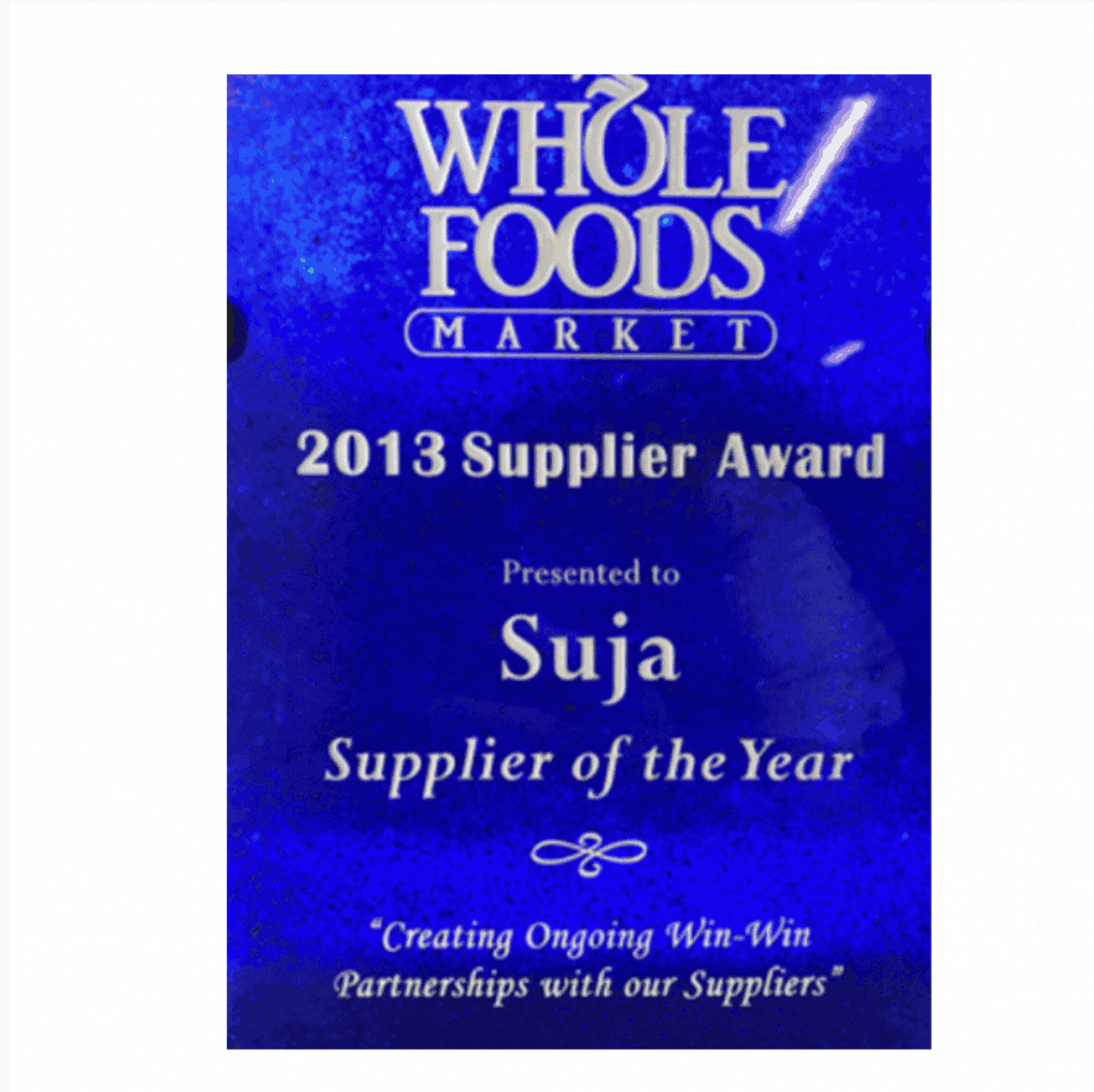
Natural channel: Whole Foods, Sprouts, and most natural independents typically charge little to no formal slotting. The natural channel rewards distribution-readiness and brand story over financial power. When Suja launched in 50 Southern California Whole Foods stores in September 2012, we didn't write a slotting check. We got in on the strength of the product, the relationships, and the velocity data. That's the beauty of starting in natural.
Conventional grocery: This is where slotting fees get real. Kroger, Albertsons, Safeway, Publix... these chains can run anywhere from a few thousand dollars per SKU per store cluster to hundreds of thousands across a division. A regional rollout at a mid-size conventional chain might cost $50,000-$200,000 in slotting before you see your first sale. A national conventional launch? Do the math on 2,000+ stores.
Mass retail (Walmart, Target): Walmart is largely slotting-free... but don't mistake that for "free." Their everyday low price model requires you to deliver margin, and the cost of meeting their volume expectations can be its own form of financial commitment. Target has historically charged modest new item fees depending on category and timing. Mass retail usually kills you in trade spend and promotional requirements, not slotting.
Club stores: Costco doesn't charge traditional slotting. What they want is a killer product at a killer price with a margin structure that works for both sides. But Costco will ask you to fund samples, in-store demos, and promotional discounts that add up quickly. The "free" channel still has costs.
Drug and specialty: CVS, Walgreens, and specialty retailers vary widely. Some charge formal slotting. Some charge what they call "scan-downs" or "new item allowances" that function the same way.
The Founder Mistake I See Most Often
Here's the pattern I watch founders walk into over and over again.
They get a call from a conventional grocery buyer. Big chain. Big opportunity. The buyer says they're interested... but there's a slotting fee involved. The founder does the math on what the distribution could mean for revenue, gets excited, and writes the check.
Then reality hits.
They're in 400 stores with a product that's doing 1.5 units per store per week when the category average is 4.5. The store manager doesn't know anything about the brand. There's no in-store execution support. No demo budget. No velocity-driving activity. And in 6-8 months, when the reset comes around, the buyer has no reason to keep them on shelf.
The slotting fee wasn't the problem. The problem was entering a channel before the brand was ready to perform in it.
Don't confuse distribution gains with velocity gains. Getting into 400 stores feels like progress. But if velocity is anemic, those 400 doors are just 400 ways to get discontinued.
When Slotting Is Worth It
There are absolutely situations where paying slotting makes sense. Here's my framework.
You've proven velocity at a similar retail tier. If your product is already outperforming category benchmarks at natural grocery or specialty, and you have the syndicated data (Nielsen, SPINS, or IRI) to prove it, paying to enter conventional is a reasonable bet. You have evidence. You're not guessing.
The door count is concentrated enough to activate. Paying slotting for 50 stores in one geographic cluster where you can drive demos, local marketing, and personal selling is very different from paying for 300 stores scattered across 5 states. Concentration lets you actually move the needle. Scatter is just an expensive experiment.
Gross margins can absorb the investment. This is where "gross margin determines destiny" becomes literal. If you're running at 35% gross margin and you're spending $150,000 in slotting to get into a chain, the revenue recovery math has to work. Run the numbers. If you need 18 months of healthy turns just to break even on the slotting investment, think hard about whether this channel is right at this stage.
You have retailer confidence through a relationship, not just a fee. The best retail entries I've seen aren't driven purely by checkbook. They're driven by a buyer who believes in your velocity story, who's excited about what your brand does for the category, and who's helping you succeed inside their four walls. The check gets you the slot. The relationship determines whether someone fights for you at the reset. Both matter.
The Negotiation Play Most Founders Don't Make
Slotting fees are often negotiable. Especially if you have performance to point to.
A few moves worth knowing:
Offer scan-down trade instead of upfront cash. Some retailers will accept a per-unit discount off invoice for a defined period (say, 12-16 weeks) in lieu of a lump sum. This aligns your cost with your actual sales. You only pay if product moves. Retailers with short-term revenue pressure often accept this.
Propose a pilot structure. Instead of paying for 300 stores out of the gate, ask for a 50-store test in your highest-potential markets. Show velocity performance over 90 days, then expand. Some buyers will take this deal. Not all, but more than you'd expect.
Use a strong lead retailer as leverage. If you're already performing at Whole Foods or Sprouts, bring that data. Some conventional buyers will reduce or waive slotting for a brand with proven natural channel velocity because it reduces their risk. The story matters: "Here's what we're doing at comparable natural retailers, and here's why your customer is the same shopper."
Understand what the fee is really for. Ask the buyer directly: is this to offset reset costs? Cover out-of-stocks during the fill cycle? Compensate for a lower-performing SKU it's replacing? Understanding the purpose helps you negotiate alternatives that satisfy the same need.
What Gets You Discontinued (It's Not Always Velocity)
One more thing people miss. You can do everything right on velocity and still get cut.
Retailers look at the whole relationship. Are you hitting fill rates consistently? Are your orders arriving on time? Do your chargebacks match your invoice? Is your rep responsive when there's a problem? Is your category manager building a real story for the buyer?
I promoted Jason Polinsky, our category manager at Suja, to report directly to me. Not because category management sounds important... but because I learned that the people who understand retailer economics deeply, who can build a category story that makes the buyer look smart to their boss, are some of the most valuable people you can have. We had a saying at Suja: "The truth of the business is at the shelf." Your cat man is the person who lives that truth daily.
Slotting gets you the chance. Everything else determines whether you keep it.
The Simple Truth
Retail is a performance business. Always has been.
The brands that win at conventional grocery aren't the ones who paid the biggest slotting fees. They're the ones who showed up with proven velocity, strong execution, real retailer relationships, and the gross margin to fund the whole thing without bleeding out.
CPG is a "Penny Profit" business. Every dollar in slotting you pay has to work. The pennies matter.
Before you write that check, ask yourself honestly: am I paying to earn the right to prove myself? Or am I paying because I'm hoping distribution will solve a velocity problem I haven't fixed yet?
Hope is not a strategy. Not at the shelf, and not in the retailer's reset meeting.
Know your velocity story. Know your margins. Know your activation plan for those doors. Then write the check.
Want the full retail playbook, including how to sequence channels, build retailer relationships, and structure your trade spend budget? It's all inside The CPG MBA — Jeff's comprehensive operating system for emerging CPG founders. And if you're at a critical growth inflection right now, the 90-Day Breakthrough program gives you direct access to Jeff and a cohort of founders navigating the same challenges.
Want more insights like this?
Get Jeff’s take on what’s actually working in CPG. Direct to your inbox.