SPINS and Scan Data: What Every CPG Founder Needs to Know to Survive on Shelf
Jeff Church breaks down how to use SPINS, Nielsen, and scan data to keep your shelf space, win buyer meetings, and hit velocity benchmarks before you get dropped.
Two years into Suja, after we'd spent every waking hour fighting to get on shelf, I told my head of sales Nicky: "I can't wait until we achieve full distribution and have nothing to worry about."
She looked at me like I'd lost my mind.
"Jeff," she said. "Two years from now, we'll be fighting tooth and nail to maintain our shelf space."
Then she asked: "Do you know what a cat man is?"
I did not.
I'd built and sold companies before Suja. I wasn't new to CPG. But I had never scaled to the point where category management was a survival skill. I had no idea that scan data... the scanner data telling you how fast your product is moving versus the competition... was the difference between keeping your slot and losing it overnight.
That exchange still embarrasses me a little. Because what Nicky was actually telling me is that getting on shelf is a contract. And scan data is how retailers grade your performance on that contract every single week.
The Buyer Knows More Than You Think
Here's something most founders miss going into early buyer meetings: the person sitting across from you has a detailed syndicated data report on your category before you walk in. They've seen your velocity. They know how your turn rate compares to the category median. They've watched whether your % sold on promo is creeping up quarter over quarter.
Dwight Richmond, who came up through Whole Foods and was one of the early architects of the natural foods category, told me later that Whole Foods' decision to expand the cold-pressed juice category... a bet that ended up making Suja... was driven almost entirely by syndicated data trends, consumer insights, and field feedback from foragers. They didn't guess. They had proof.
The buyer is playing with a full deck. The question is whether you are too.
Hope is not a strategy. And in a buyer meeting, neither is enthusiasm.
What "Scan Data" Actually Is
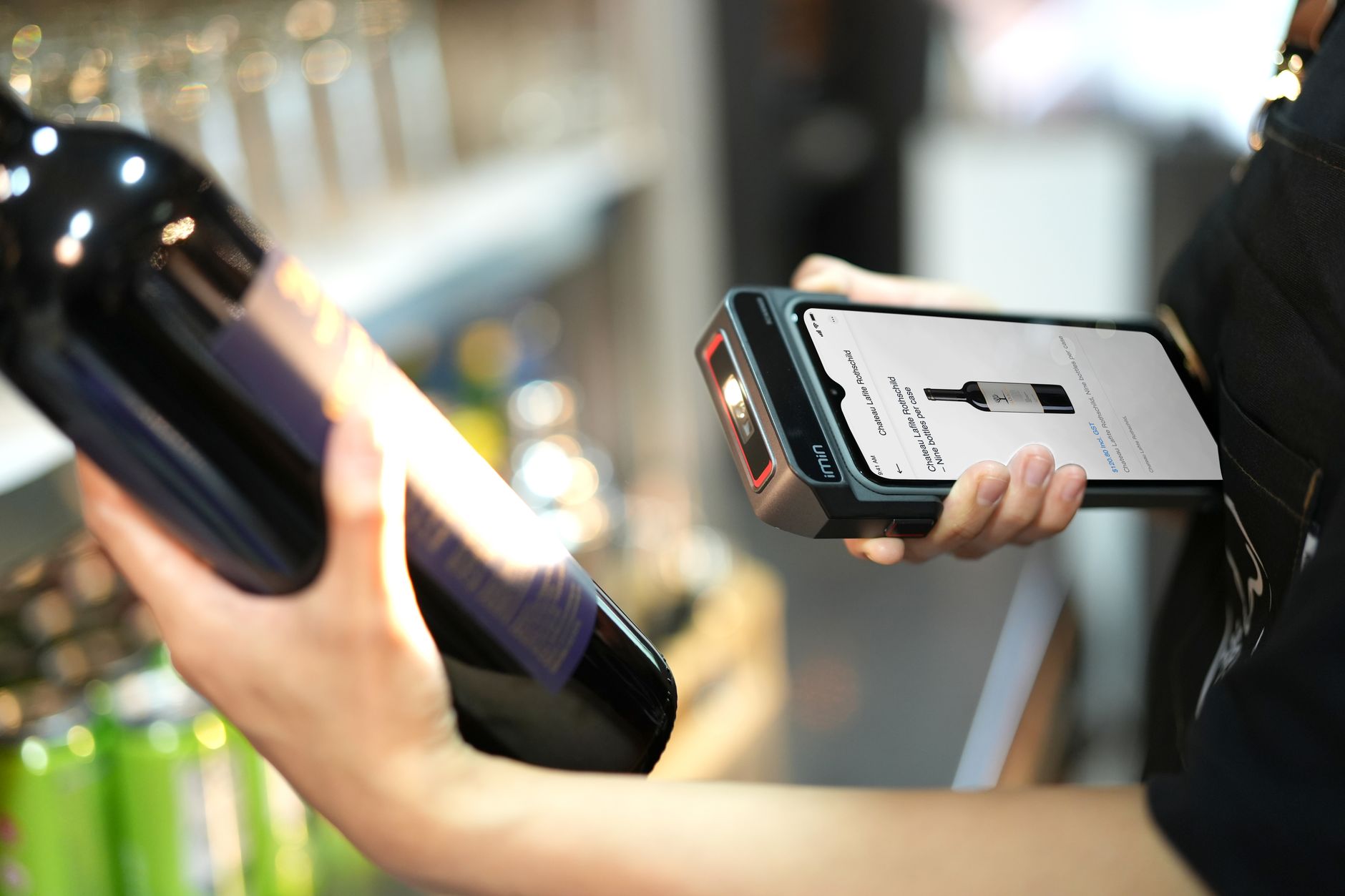
Scan data is point-of-sale information from retail registers. Every time a consumer buys your product, that transaction gets logged. Aggregate it across thousands of stores and you have syndicated data... sold by companies like SPINS (the gold standard in natural/organic channels), Nielsen, and Circana (which is the rebranded IRI).
Large multinationals spend millions on this data annually. Mid-size brands typically spend $200K+ per year. A good category manager commands around $200K in salary. So for most brands under $20-30M in revenue, you're effectively playing without the full deck.
But here's what matters: you don't need the full deck. You need to understand the cards that determine whether you survive the next planogram reset.
Four Numbers Every Founder Needs to Know Cold
ACV (All Commodity Volume)
This is the percentage of total retail store sales volume your product is distributed against. Think about it this way: 1,000 low-traffic independent grocery stores have dramatically lower ACV than 300 Walmart stores. Distribution expansion that doesn't improve ACV is a vanity metric. You're adding doors, not building a business.
Velocity / USW (Units Per Store Per Week)
How many units are you selling per store per week? This is the heartbeat number. Everything else flows from here. Buyers benchmark you against the category median, not against your own trajectory. Growing 20% year-over-year sounds great until the buyer tells you you're still at 30% of category median.
Dollars Per Point of Distribution
A more nuanced velocity read. Are you generating proportional dollar sales relative to your distribution footprint? This number shows the buyer whether expanding your shelf space would actually move the needle for them, or just dilute performance further.
% Sold on Promo
If more than 35-40% of your product is moving on promotion, you have a problem. You're not building a brand. You're training consumers to wait for a deal and bleeding margin every week to do it. CPG is a "penny profit" business... the pennies matter. And every point of unnecessary promo spend compounds.
The Velocity Benchmarks That Actually Matter
Here's the framework I use when auditing a brand's retail performance against category median:
- 80%+ of median: You're winning. Expand off-cycle, push for more space, play offense.
- 60-80% of median: You're earning the right to grow. Ask for more SKUs at the next reset.
- 50% of median: You're holding your own. Stable, but don't push for expansion yet.
- 30-50% of median: Something has to change. Pricing, placement, promotion mix... one of these is broken. Fix it before the reset.
- Below 20% of median: Something is seriously amiss. You're getting dropped if you don't act with urgency.
I paid nearly $1 million in slotting fees to Albertsons at Rowdy Energy. Our velocity ended up significantly below their hurdle levels. They discontinued us after eight months.
Eight months. That's $1 million in fees for eight months of shelf space. The data was telling us the story the whole time. We just didn't have a credible plan to move the needle fast enough.
That's what it costs to not know your numbers.
How to Get Scan Data Before You Can Afford $200K/Year
Founders ask me this all the time. The honest answer: you don't need the Cadillac version to start. Here are five practical paths:
1. Ask your distributor. UNFI and KeHE both have data access programs, and some of that data trickles down to the brands they distribute. Ask your rep directly. It doesn't hurt to ask.
2. Use your retailer portals. Target, Walmart, and Kroger all provide sell-through reporting through their vendor portals (Retail Link, RedCard, etc.). This isn't free... but it's often included in your vendor relationship. If you're not using it, you're flying blind on purpose.
3. Ask your broker. A good broker should be synthesizing velocity benchmarks for you at every quarterly review. If yours isn't, that's a conversation worth having. A broker who can't walk you through your ACV and velocity trends relative to the category is not a strategic partner.
4. Use Circana's free category trend content. Circana (formerly IRI) publishes category trend reports publicly. Not granular, but useful for understanding big-picture category momentum and price tier shifts.
5. Hire fractional before you hire full-time. At Suja, we used fractional category management support before we could justify a full-time hire. When we finally brought Jason Polinsky in full-time as our category manager, I eventually had him report directly to me. He became one of the most valuable members of the entire team. You can get 70% of the value for 20% of the cost by starting fractional.
Walk Into That Room as the Category Expert
The goal isn't just to know your own numbers. It's to walk into every buyer meeting as the most informed person in the room about your category.
That means knowing where your velocity ranks against the top three competitors. Knowing whether your category is growing or declining. Knowing which price tier is gaining share. Knowing whether the trend is toward large format or single-serve.
When you can frame your pitch around category health rather than just your brand's performance, you shift the entire dynamic. You're not a vendor asking for shelf space. You're a category partner helping the buyer win.
If the consumer is the holy grail, retailers hold the keys to the kingdom. And buyers want partners, not just products.
The One Rule That Changes Everything
Don't confuse distribution gains with velocity gains.
I can't say that enough. Getting into more stores does not mean you're winning. It might mean you're spreading your velocity so thin that you're underperforming in every account... and making the case for delistment at every single one of them.
The discipline: before you push for more doors, make sure you're hitting hurdle velocity in the doors you already have. That's how you stay on shelf. That's how you earn the right to expand without risking everything you've already built.
Nicky was right back then, and she would have been right ten more times over the next decade. The shelf doesn't care how hard you worked to get there. It only cares what happened at the register last week.
Dream boldly. Plan soberly. And know your velocity.
If you want to go deeper on building a retail-ready CPG brand with the data fluency and buyer meeting skills that drive real results, Jeff's MBA for CPG program gives you the full playbook. Or if you're navigating a specific growth challenge right now, the 90-Day Breakthrough puts Jeff's frameworks directly in your hands.
Want more insights like this?
Get Jeff’s take on what’s actually working in CPG. Direct to your inbox.