CPG Brand Loyalty: Why Repeat Rate Is the Only Number That Actually Matters
Most CPG founders obsess over trial. Jeff Church explains why repeat purchase rate is the only metric that tells you if you actually have a brand — and what 40% looks like in practice.
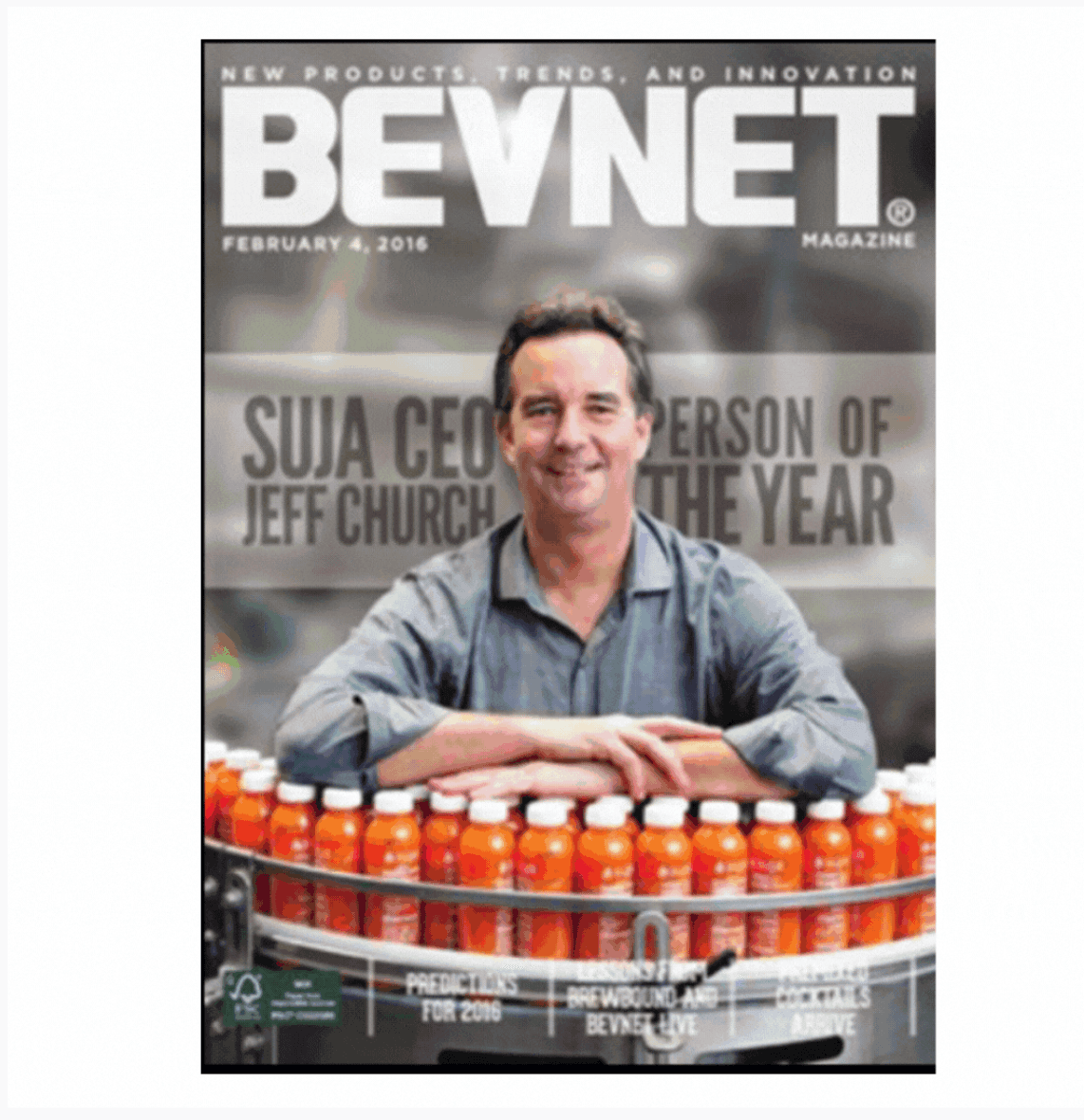
In 2019, we cut Suja's marketing budget by more than $4 million.
Not a trim. Not a strategic reallocation. We stripped out more than $4 million in awareness campaigns, paid ads, and some of our demo spend. Then we held our breath a little.
Revenue grew about 10%.
...
I tell that story a lot because it cuts through something founders get confused about. When revenue grows after you cut marketing, it means one thing: the customers you already had didn't need to be reminded. They were coming back anyway. The marketing spend had been buying trial. The product itself had been building loyalty.
And in CPG, those are two completely different games.
The One Metric That Tells You Everything
I've looked at hundreds of CPG brands over 30+ years. Eight companies, $700M+ in exits, sitting across from a lot of founders at a lot of tables. And there is one metric that separates the brands that eventually win from the ones that burn through capital and wonder why growth stalls.
Repeat rate.
Not gross revenue. Not door count. Not social following. Not even velocity, though velocity matters enormously.
Repeat rate. What percentage of first-time buyers come back within 12 months?
Here's the benchmark that should be on your wall: target 40-50%.
If your repeat rate is below 20%, you don't have a brand. You have churn dressed up as a business. Every marketing dollar you spend is filling a leaky bucket. You're acquiring new customers to replace the ones you lost. That's a treadmill, not a growth engine.
I've seen founders raise another round, expand to 2,000 new doors, launch three new SKUs... and the underlying repeat rate is still 15%. None of the noise fixes the signal.
"You can market your way into trial, but you cannot market your way into loyalty."
That's not a motivational line. It's a business model truth.
What Loyalty Actually Looks Like
When we launched the Suja wellness shots — that 2-ounce cold-pressed shot you can grab at Costco or Whole Foods — we had no idea how big it would get. A fortune teller had told Linda (my wife) in 2014 that the product creating the most value for Suja would be wellness shots. We thought that was cute.
It was right.
Within a year of launch, we'd captured over 30% market share as the third entrant (behind VIVE and KOR). At Costco, we were selling about $2,000 per club per week. The margins were close to 60%. And the reason those margins held was loyalty — people buying their shots every single week as part of their morning routine.
Compare that to our kombucha line. Good product. We'd actually solved one of the hardest technical challenges in kombucha — keeping alcohol levels consistent at scale. But consumers never saw Suja as a kombucha brand. We were a juice company. They tried our kombucha once, nodded, and went back to GT's.
Trial without loyalty. Solid product, wrong brand context.
Eventually we made the decision: swap out kombucha (about 12% gross margin, outsourced) for more shots (about 60% gross margin, made internally). That single product mix shift moved our company-wide gross margin from roughly 32% to nearly 40%.
Loyalty isn't just emotional. It's financial.
The Manhattan Billboard Problem
Early on at Suja, we made a classic mistake. We ran billboards in Manhattan. Real ones. Splashy.
We had four Whole Foods stores in New York City at the time.
Four.
We created awareness with nowhere to convert it. And even if we had sent a thousand people into those four stores, we were still solving the wrong problem. First-time trial is the beginning of the conversation, not the win. The win is when that person walks back in two weeks later and buys again.
I think about that billboard a lot when I see founders pouring budget into top-of-funnel awareness. The question to ask first is simpler: what percentage of the people who already bought us came back?
If you can't answer that question, you're not managing a brand. You're managing transactions.
How to Measure It (And What to Do When the Number Is Bad)
Most early-stage CPG founders don't have syndicated data (Nielsen, SPINS, IRI) yet. That's fine. Here's what you can actually do:
DTC and Amazon: Pull repurchase rate directly from your analytics. What percentage of Month 1 customers came back in Months 2-12? Below 20%, stop asking "how do I grow" and start asking "why aren't they coming back."
Retail: Look at velocity trends. If velocity is flat or declining across your distribution footprint, that's often a repeat rate problem showing up in the shelf data. Talk to your broker. Pull consumer panel data if you have access.
At the shelf: Go stand in front of your display and watch. Jody Cnossen (one of the sharpest sales operators I've ever worked with) once said something that stuck: "Jeff, the truth of the business is at the shelf." You can learn more from 30 minutes in a Whole Foods aisle than from a week of spreadsheets.
When repeat rate is below target, the honest answer is almost never "we need more marketing." It's usually one of three things:
1. Product-market fit is incomplete. The first experience didn't fully deliver. Maybe taste, maybe texture, maybe it didn't work as promised. Fix the product before you fix the funnel.
2. You're in the wrong context. Like our kombucha. Great product, wrong brand association. The consumer's first purchase was exploratory. There was no hook back to their existing habit.
3. The routine isn't there. Some of the best CPG brands aren't just products — they're habits. Green juice in the morning. A functional shot before the gym. Energy drink at 2pm. If your product doesn't attach itself to a consistent moment in someone's day, repeat gets fragile.
The last one is why Suja's positioning of "health without the punishment" worked. We weren't asking people to change who they were. We were making it easier to be the health-conscious person they already wanted to be. That's an identity statement, not just a product claim. And identity is the most durable loyalty driver there is.
The Spending Trap
When we cut that $4M+ in marketing at Suja in 2019, it wasn't brave. It was necessary. We were burning more than $10 million a year on $100M in revenue. At our worst point, we were operating with less than $100,000 in the bank. We had $40 million in secured debt coming due in October 2018. The cuts weren't optional.
But what I learned from that season — when we stripped away everything nonessential and had to survive on what the brand actually was — is something I think about with every founder I coach today.
Strong brands with loyal customers don't always need massive spending to grow.
The marketing had been propping up trial. The product was earning loyalty. Once we stopped confusing the two, we could invest accordingly.
"Revenue without margin is ego." I say it all the time. And there's a companion truth underneath it: marketing spend without loyalty infrastructure isn't growth. It's expensive customer acquisition with no flywheel.
Build the flywheel first. Then step on the gas.
Don't confuse distribution gains with velocity gains. Don't confuse trial gains with loyalty gains. CPG is a "Penny Profit" business — the pennies matter, and so does where you spend them.
The Principle, Stated Plainly
Trial is a tactic. Loyalty is a strategy.
You build trial through placement, promotions, sampling, and distribution. You build loyalty through the product, the routine, and the fit between what you promise and what the consumer actually experiences.
When those two things align — when the first purchase leads naturally to the second, then the third, then the standing Subscribe & Save order — you have a brand.
Until then... you have a launch.
Get your repeat rate to 40%. Everything else gets easier from there.
Want to go deeper on building a CPG brand that actually earns loyalty — and the financial discipline to back it up? The MBA for CPG Program is the most comprehensive founder-to-founder program I've built, covering unit economics, retail strategy, and exit planning. And if you're at an inflection point right now, the 90-Day Breakthrough is where we work on it together, hands-on.
Want more insights like this?
Get Jeff’s take on what’s actually working in CPG. Direct to your inbox.