CPG Demand Planning: How to Forecast Inventory Without Killing Your Cash Flow
Most CPG founders either run out of stock or drown in it. Here's the demand planning framework that keeps you in stock, in margin, and in business.
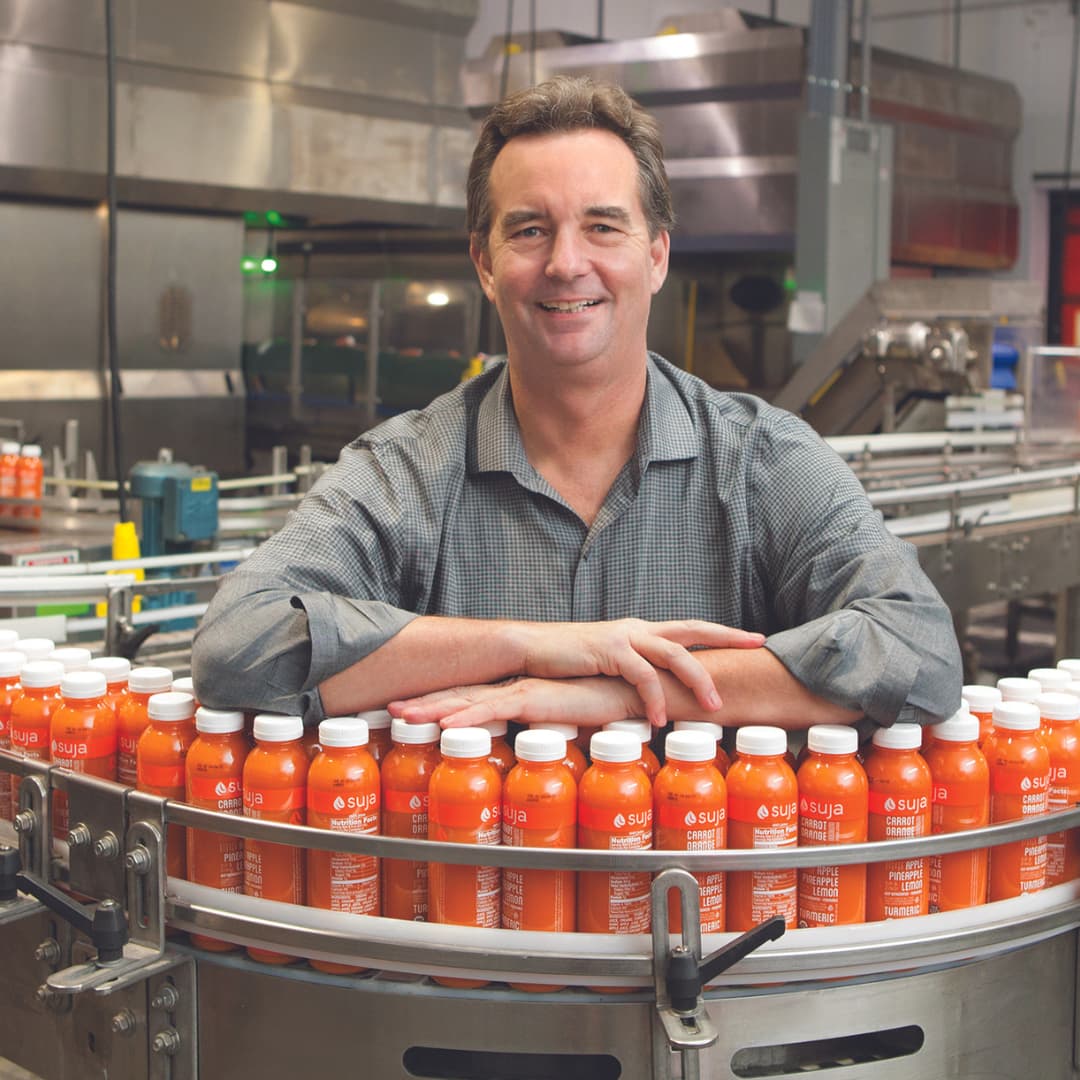
In 2013, Suja went from $600,000 in annual revenue to $18 million in a single year.
That's not a typo. We grew 3,000% in twelve months. And while that sounds like a great problem to have, let me tell you what it actually felt like inside the building.
We were producing cold-pressed juice with a 24-day shelf life. Every bottle we made was a live bet that a consumer would find it, want it, and buy it before it expired. We were processing 1.5 million pounds of fruits and vegetables every week. And our demand forecasting at the time? Let's just say it was... optimistic.
We over-produced and watched product expire. We under-produced and couldn't fill Whole Foods orders. We made promises we couldn't keep. We made promises we kept but barely.
That experience burned demand planning into my DNA. Because when your product expires in 24 days and you're scaling 30% month over month, a bad forecast isn't an inconvenience. It's an existential threat.
Most CPG founders I talk to today have the same problem in a slightly different form. They're not running perishable juice. But they're still running out of stock at the worst possible moments, or sitting on 9 months of slow-moving inventory that's quietly suffocating their working capital.
Neither is bad luck. Both are planning failures.
The Two Ways Founders Get This Wrong
Failure Mode 1: The Eternal Stockout
You land a big retailer. Orders come in. You're thrilled. Then you can't fill them.
Buyers don't care why you're out of stock. They care that the shelf is empty. And in their world, empty shelves mean two things: they look bad to their boss, and you look unreliable to them. Miss fill rates enough times, and they start looking for your replacement before you even know there's a problem.
Retailer delivery performance below 95% is a red flag. Below 90%, and you're actively shortening your time on shelf.
Failure Mode 2: The Inventory Graveyard
You get excited about a retailer launch. You go big on a production run to hit your cost-per-unit target. You figure you'll sell through in three months.
Six months later, you've got a warehouse full of product and your CFO is trying to explain why you have $400,000 in inventory and $90,000 in cash. That inventory isn't an asset at that point. It's cash wearing a costume.
This is how brands quietly suffocate. Not from lack of revenue, but from inventory decisions made on hope instead of data.
Hope is not a forecasting model.
The Four Questions That Actually Matter
I've helped a lot of founders build their demand planning process from scratch. And every conversation comes back to the same four questions. Get these right, and you'll stop firefighting inventory problems.
1. What does your rolling 13-week sell-through tell you?
Not your distributor orders. Not your gross shipments. Your sell-through. The velocity at which product is actually leaving shelves and reaching consumers.
Distributor orders can be lumpy, promotional, or front-loaded. Consumer velocity is the truth. If you're only watching orders coming in, you're reading the forecast backwards. Don't confuse distribution gains with velocity gains. A warehouse full of product that isn't moving isn't growth. It's a future return.
Pull your scan data. Look at your weekly velocity per store. That number is your ground truth.
2. What's your production lead time, and have you applied the Rule of Twos?
Most founders dramatically underestimate how long it takes to get from a purchase order to product on shelf. Lead times from co-manufacturers routinely run 8-12 weeks once you factor in scheduling, raw material procurement, production, QC, fulfillment, and delivery.
My rule: whatever lead time your co-man quotes you, double it. Not because they're lying, but because things always take longer than planned. The Rule of Twos (twice as long, twice as expensive) is almost never wrong.
If your retailer does a planogram reset in March, and your co-man needs 8 weeks, you should be placing that production order by late November at the absolute latest. Most founders place it in January and wonder why they're scrambling in February.
3. What safety stock buffer is right for your product?
Safety stock isn't waste. It's insurance. The right buffer depends on three variables: your demand variability, your lead time, and your shelf life (if applicable).
A product with highly seasonal demand, a 30-week lead time, and no shelf life concern might need 12 weeks of safety stock. A perishable product with stable, predictable velocity might need only 3 weeks.
Here's a simple place to start: take your average weekly velocity per account, multiply by your production lead time in weeks, then add 20-30% as buffer. That's your reorder trigger point. When inventory falls to that level, you place the next production order.
This isn't complicated math. But most founders don't do it systematically, which means they place orders reactively... usually about 4 weeks too late.
4. What promotional lifts are you baking in?
This is the one that kills people.
You agree to run a promotional event at Kroger in September. It's a 2-for-$7 TPR. Your velocity normally runs $12 per store per week. On promotion, it'll probably run $22-$28 per store per week.
Did you factor that into your production plan six months ago?
If not, you've got two bad options: go out of stock on promotion (the worst possible time, because that's when new consumers are trying to find you), or emergency-produce at a premium. Either way, margin takes a hit.
Build your promotional calendar in January. Bake those lift factors into your demand plan. Give your co-man visibility. This isn't sophisticated supply chain management. It's basic courtesy to your own business.
A Simple Framework to Anchor On
Most early-stage founders don't need enterprise demand planning software. They need a rigorous spreadsheet and the discipline to update it weekly.
Here's what that looks like:
Monthly: Update your baseline velocity per account using the most recent 4 weeks of scan data. Flag any accounts trending more than 20% above or below your baseline.
Quarterly: Review your promotional calendar for the next two quarters. Add promotional lift assumptions (typically 60-120% above baseline velocity on a good promo). Calculate the incremental production volume needed and confirm your co-man can handle it.
Every Production Cycle: Apply the Rule of Twos to your lead time. Place orders against your reorder trigger point, not against a gut feeling or a sales rep's enthusiasm.
Every Retailer Conversation: Ask what they need in terms of fill rate and lead time. Then build those requirements backward into your production schedule. Retailers don't want to hear about your supply chain problems. They want product on shelf.
The Real Cost of Getting This Wrong
After Coca-Cola chose not to acquire the remaining portion of Suja in 2018, our CFO Todd Fisher and I lived inside weekly cash projections. At times we were operating with less than $100,000 in the bank on a $100 million revenue company.
Cash flow killed us more than competition ever did.
Inventory is working capital. Every dollar tied up in product sitting in a warehouse is a dollar not available for payroll, trade spend, or the next innovation. CPG is a "Penny Profit" business. The pennies matter. And too many founders let inventory decisions bleed those pennies in ways they can't see until it's a crisis.
Build the forecast. Apply the Rule of Twos. Know your sell-through. Protect your fill rate.
Demand planning isn't a back-office function. It's a strategic discipline. And founders who treat it that way don't just stay in stock.
They stay in business.
Ready to build the operational foundation your CPG brand needs? The CPG Founders MBA goes deep on demand planning, working capital, and the full operational playbook for scaling brands. Or if you're in a specific crunch right now, the 90-Day Breakthrough is designed to diagnose and fix exactly these kinds of margin and cash flow problems fast.
Want more insights like this?
Get Jeff’s take on what’s actually working in CPG. Direct to your inbox.