CPG 3PL Strategy: How to Choose, Use, and Know When to Switch Your Third-Party Logistics Partner
Jeff Church on when CPG founders need a 3PL, how to evaluate one, what to watch in the contract, and how to manage performance before it becomes a crisis.
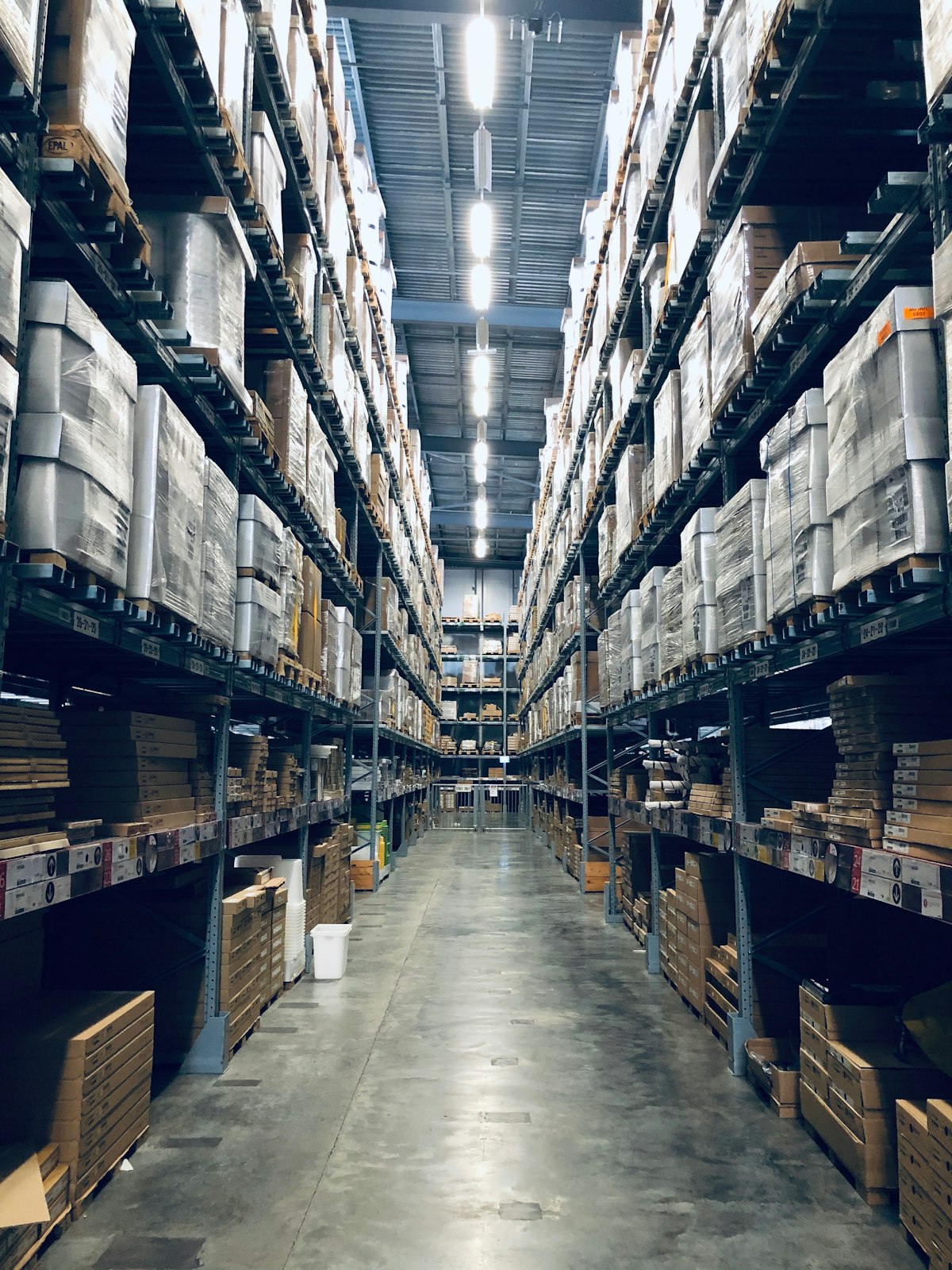
I'll never forget the first time we delivered to a Whole Foods distribution center with Suja.
We had a 28-foot refrigerated truck. The line was full of 53-foot semis. I'm navigating this thing like a man who has absolutely no business operating a commercial vehicle while professional drivers stare at me with polite bewilderment. We back up to the dock. I climb on a forklift to unload the pallets. I've operated a forklift exactly zero times before this moment.
Within sixty seconds, I sliced a pallet of beet juice. Not a small slice. A real slice. Beet juice everywhere. Dark red, cold, running across a loading dock in front of the Whole Foods receiving crew.
We cleaned it up. We got the order unloaded. The receiving team was gracious. And I drove back to San Diego having learned something important: this is not a sustainable logistics strategy.
That moment is where most founders first seriously consider outsourcing logistics. Not in a conference room. Not at a strategy session. On a loading dock, covered in beet juice, wondering what they've gotten themselves into.
What a 3PL Actually Is
Let's establish terms first, because I see founders mix these up constantly.
A distributor like UNFI or KeHE warehouses your product and delivers it to retailers on their existing routes. They're embedded in the retailer relationship. Their markup is built into your dead-net economics.
A third-party logistics provider, a 3PL, is different. They warehouse your product in their facility and handle outbound shipping on your behalf. You control the shipping logic. You pay them for storage, handling, and freight. They don't have a built-in retailer relationship. They execute what you direct.
For most emerging CPG brands, the 3PL question isn't about your national distributor. It's about everything else. Your DTC orders. Your direct-to-retail accounts. Your foodservice business. Regional retailers you're serving direct. Amazon. Any channel where you're not running through a national distributor.
That's more channels than most founders realize. And managing them yourself, out of your co-manufacturer's warehouse or your garage or some storage unit you're renting month to month, only works until it doesn't.
The Inflection Point
Here's roughly when the 3PL conversation gets serious.
You're doing meaningful DTC volume, call it a thousand orders a month or more, and you're either paying your co-man to handle fulfillment (expensive, and it's not their core business) or you've got people pulling and packing orders in a rented space that was never designed for this. Your order accuracy is a prayer, not a process.
Or you've landed a handful of direct-to-retail accounts, regional grocers or club stores testing you in a limited set, and they want shipping that looks professional. Correct labels. Clean pallets. On-time delivery windows. The scrappy founder hustle that worked at your first fifty-store launch doesn't scale to a buyer who's evaluating whether to roll you out nationally.
Or you're growing fast enough that operational capacity is becoming the constraint. The Rule of Twos applies here just like everywhere else in CPG: whatever you think logistics will cost and however long you think it'll take to set up a proper fulfillment operation, double both numbers. Founders who don't make the transition early enough end up running a logistics business while trying to also run a brand.
The 3PL decision is fundamentally a capacity and focus question. Not a cost question, though cost matters. Where do you want your time and energy going?
B2B 3PL vs. DTC 3PL
This is the distinction that trips founders up most often, because they're genuinely different animals.
A DTC 3PL is optimized for high-velocity, individual-order fulfillment. They're picking single units, packing them into boxes with your branded insert and tissue paper, and shipping to consumers' homes through UPS or FedEx. Their expertise is speed, accuracy, and presentation. Brands like ShipBob, Whiplash, and Ware2Go sit in this category. Volume is measured in orders, not pallets.
A B2B 3PL is optimized for pallet-level movement. They're receiving full truckloads from your co-man, storing temperature-controlled if needed, and shipping pallet quantities to retailers or distributors. Their expertise is compliance. Retailer routing guides are exacting. ASNs, labels, delivery appointments, pallet configuration, all of it matters. A single routing guide violation can trigger a chargeback that wipes out your margin on the entire shipment.
Some 3PLs do both. Most do one well.
If you're running DTC alongside retail, you probably need at least two fulfillment relationships, or one sophisticated 3PL that has built true capabilities in both. Don't assume that a 3PL that handles your retail B2B shipments well can also handle DTC. Ask specifically. Walk their DTC pick-and-pack operation before you sign anything.
At Suja, we were primarily B2B. The volume was there, 1.5 million pounds of produce processed weekly at our peak, moving through seven manufacturing locations across five years. That kind of operational complexity requires serious logistics infrastructure, not just a good relationship with a friendly warehouse owner.
Evaluating a 3PL
When you're evaluating 3PL partners, here's what I look at:
Experience in your category. A 3PL that handles frozen foods understands cold chain compliance, proper temperature monitoring, and the documentation retailers require. A 3PL that mostly handles ambient goods might not. Category experience isn't a nice-to-have, it's table stakes if your product has temperature or humidity requirements.
Retailer routing guide compliance. Ask which retailers they currently serve and how long they've worked with those accounts. Ask about their chargeback rate. A 3PL that bristles at this question is telling you something.
Technology integration. Can their WMS (warehouse management system) sync with your ERP or at least export data in a usable format? Will you be able to see real-time inventory levels? Order status? Know your own inventory without calling their customer service line? This is 2026. If the answer involves spreadsheets and manual updates, keep looking.
Location. Proximity to your co-manufacturer matters for inbound freight. Proximity to your primary customer clusters matters for outbound. If your biggest retail customers are in the Southeast and your 3PL is in Nevada, you're paying for that distance on every order.
Capacity. Can they handle your volume today, and can they grow with you? A 3PL that's at 90 percent capacity when you sign them is going to create operational problems the moment you launch a major promotion and volume spikes.
References. Not from the 3PL's website. From brands in your category that have used them for more than a year. The first year is usually fine. Years two and three are where service issues surface.
What to Watch in the Contract
I talk a lot about contracts because most founders sign them too fast and too loosely, and then live with the consequences for far too long. This is especially true with 3PL agreements.
The term. If they're asking for a two-year commitment with automatic renewal, push back. I sign three-month agreements where possible. Annual at most, with a clear termination window and no auto-renew. A 3PL that's confident in their service doesn't need to lock you in for two years.
The minimum volume commitment. Many 3PL agreements include a monthly minimum, a floor you'll be billed whether you ship it or not. Understand exactly what that floor is and whether your current business justifies it. Don't commit to a minimum you can't cover consistently.
The liability clause. If they damage your product, who pays? Most 3PL contracts limit their liability to pennies on the dollar relative to your actual product value. Know what the cap is. Consider whether you need additional insurance on inventory held at their facility.
The termination clause. If their service degrades, how quickly can you exit? A termination-for-convenience clause with reasonable notice is what you want. What you don't want is a contract where getting out of a failing relationship costs you more than staying in one.
Audit rights. You should be able to conduct an inventory audit at any time. If they're not comfortable with that, that's a red flag.
Managing Performance After You Sign
Signing with a 3PL is not the end of the process. It's the beginning. A lot of founders treat 3PL management as something that runs on autopilot. It doesn't.
Set expectations in writing, in the contract if possible, and in a formal service level agreement. Key metrics to track:
- Order accuracy rate. Should be 99 percent or better. Under 98 percent is a conversation. Under 97 percent is a crisis.
- On-time shipment rate. For B2B retail accounts, this is non-negotiable. Miss retailer delivery windows consistently and you'll be looking at chargebacks, and eventually delisted SKUs.
- Inventory accuracy. Weekly reconciliation between what they say you have and what you believe you have. Discrepancies compound quietly.
- Inbound receipt time. How quickly are they receiving and putting away product after it arrives from your co-man? Slow receipt creates inventory availability gaps that hit your fill rate before you even know there's a problem.
Fill rate is what I watch above everything else. At Suja, we required 95 percent or higher. If your 3PL can't ship your orders because they've received your product late, mislocated it in their facility, or made a picking error, your fill rate drops. And when your fill rate drops, your retail relationships suffer. Directly. Quickly.
Hope is not a strategy. "I think our 3PL is doing fine" is not a monitoring strategy. Pull the reports weekly.
When to Switch
This is the question founders avoid asking until the situation is already bad. The signs you need to switch:
- Order accuracy is consistently below 98 percent and their explanation is always a variation of "we've been busy."
- Chargebacks from retailers are climbing, and when you trace them back, they consistently originate from 3PL compliance errors.
- You can't get real-time inventory data without asking their team manually.
- Customer service response time from your account rep has slipped from same-day to multi-day.
- They've missed their promised capacity investment, and you're experiencing delays at peak volume periods.
Switching 3PLs is genuinely disruptive. The transition period carries real risk. Plan six to eight weeks minimum for a clean handoff. Overlap your old and new provider if you can afford the double carrying cost. Don't try to transition during your highest-volume period.
The bigger mistake is staying too long because switching feels hard. A 3PL relationship that's underperforming costs you in chargebacks, service failures, lost retail accounts, and founder time spent managing fires instead of growing the brand. At some point the cost of staying exceeds the cost of switching. Know when you've crossed that line.
Some mistakes slow you down. Some cost you money. Some end companies. An operations failure that results in a major retailer delisting you is the kind of mistake that can take years to recover from. The logistics infrastructure behind your product isn't glamorous. It's also not optional.
The Bigger Picture
Here's what it comes down to. Every dollar of product you sell has to get from a production floor to a shelf or a doorstep. The path it takes, and what it costs to get there, is just as important as the margin you build into the product itself.
Gross margin determines destiny. But gross margin after 3PL and logistics costs is the number that actually funds your business.
Pick the right 3PL for your stage and your channels. Negotiate contracts that don't trap you. Monitor performance like you're looking at it every week. And when it's time to switch, make the call early enough that you're managing the transition, not reacting to a crisis.
The beet juice doesn't have to end up on the loading dock floor. But if it does, at least make sure it's not your fault.
Want to build the operational infrastructure that keeps a CPG brand alive through the growth stages? The CPG Founders MBA covers logistics, supply chain, and operations in depth. And if you're ready to build your full go-to-market plan with real accountability, the 90-Day Breakthrough program is where we do that work together.
Want more insights like this?
Get Jeff’s take on what’s actually working in CPG. Direct to your inbox.